Perspectives
What might change when we make art together?
A reflection prompted by research on Arts on Prescription
If someone invited you to spend a weekend afternoon making art, what would come to mind first?
Perhaps: I cannot draw. What should I bring? Will everyone else know what they are doing?
Those hesitations make sense. We are used to judging an activity by its result: how it looks, how well we did, what we have to show for two hours of our time. Even rest can seem to need a convincing reason.
We want to ask a smaller question. If we spend some time touching materials, trying colours and sitting around a table with other people, could that time itself deserve our attention?
01 / Looking at the research
A 2026 systematic review examined Arts on Prescription: community arts participation following referral by health professionals. It is distinct from art therapy.
- studies included
- 8
- studies based in the UK
- 7
- studies with a control group
- 0
All reported improved wellbeing. Without control groups, the changes cannot confidently be attributed to the activities. Findings on anxiety and depression came from just one study, with limited improvements.
Findings and limitations: read the research ↗02 / What can a shared table hold?
The findings give us a reason to keep exploring, while remaining curious about what we do not know. For Art Healing Pod, this is a direction for reflection. The review did not evaluate our activities or establish what any individual attending them will experience.
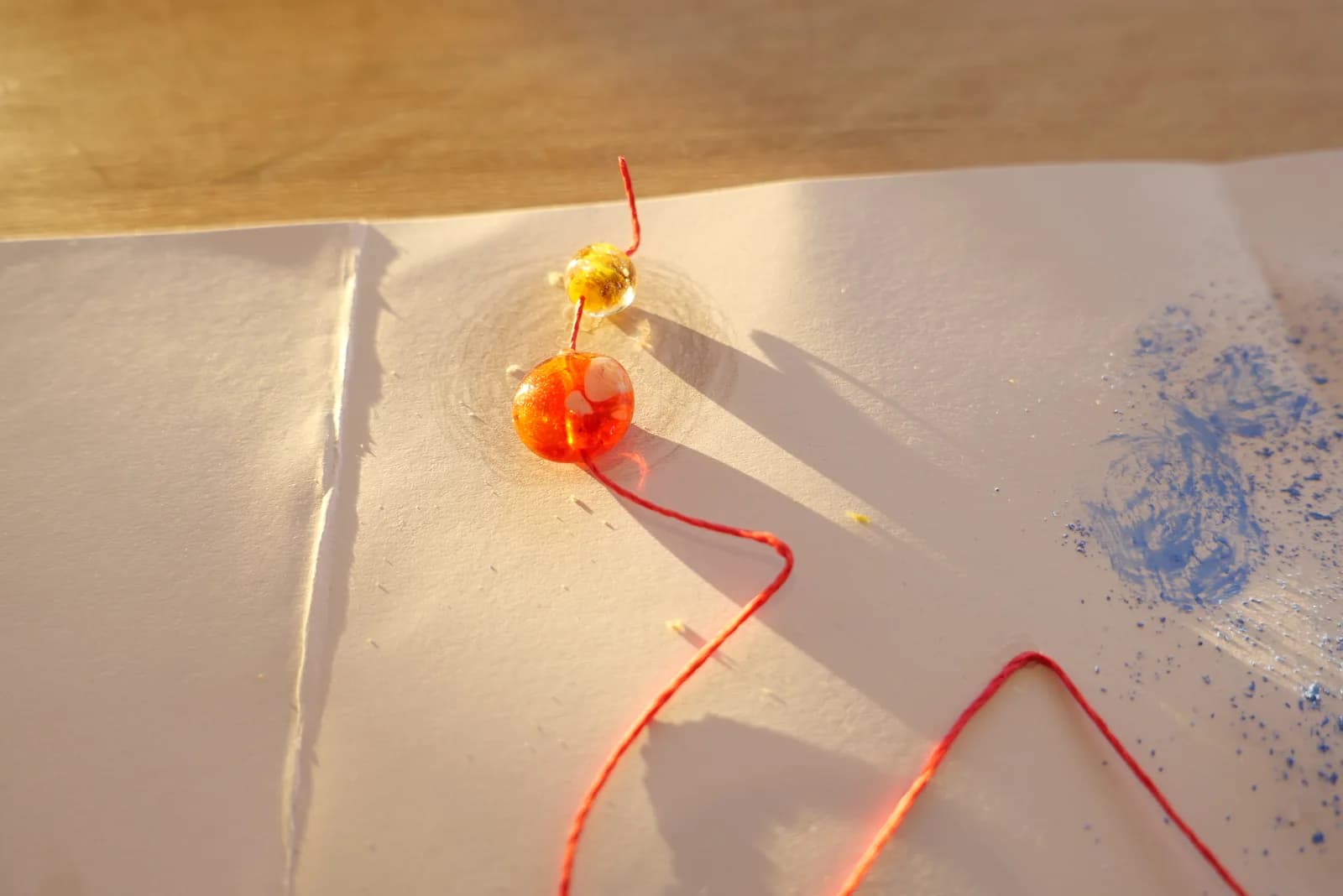
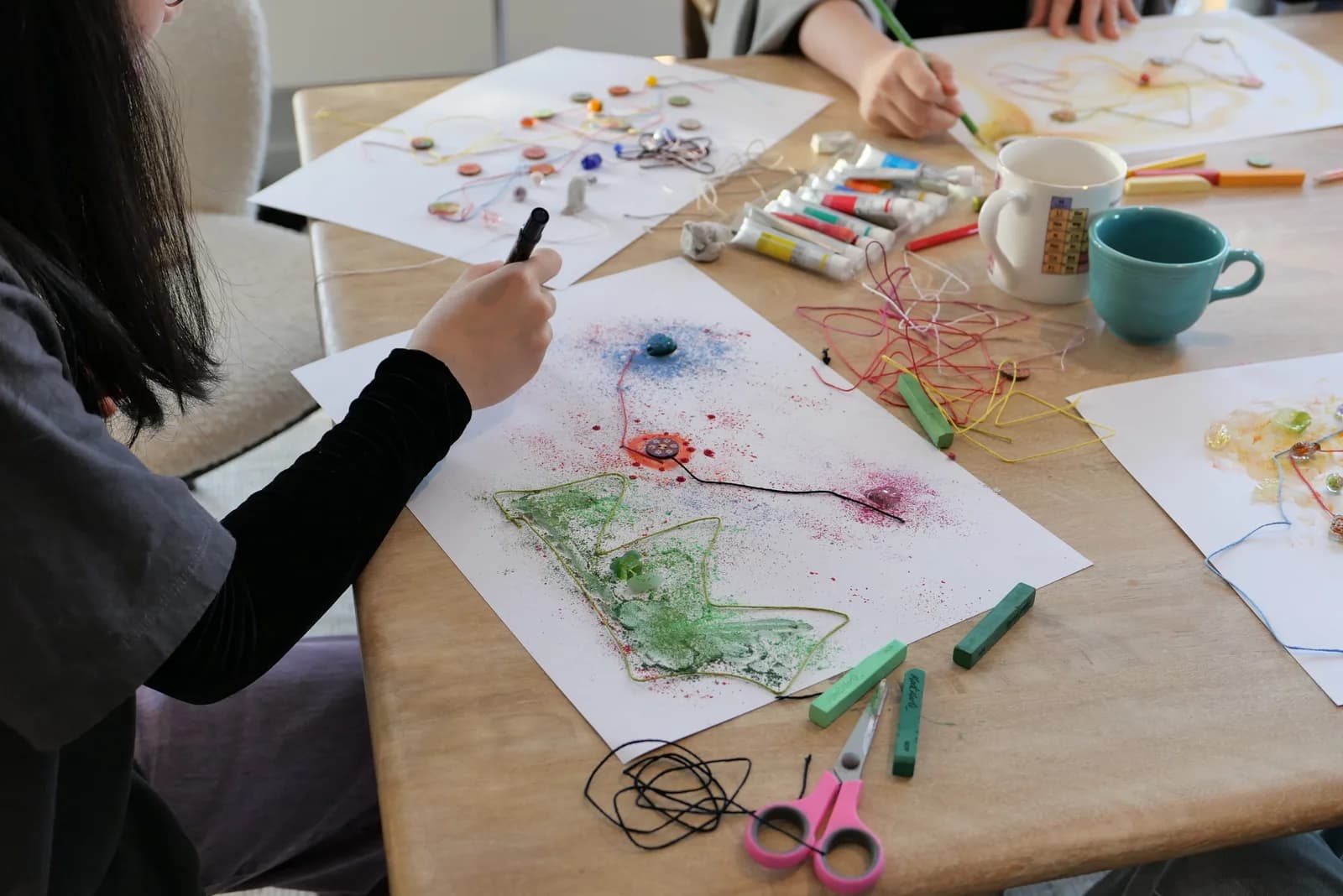
In the photographs from Inner maps, there are threads, buttons, beads and pastels. A photograph can show materials and the act of making. It cannot tell us what somebody was experiencing. That meaning belongs with the person who made the work.
We would rather start with practical questions. Are the materials easy to reach? Does a first-time visitor know what will happen next? Can someone who wants to talk and someone who wants to work quietly both feel welcome to take part?
We hope a shared table can accommodate different rhythms. You can try something, pause, share, or keep your work to yourself. Each of those choices deserves consideration.
03 / Leaving room for expression
Living abroad can involve introducing yourself again and again: how to pronounce your name, where you come from, why you are here. We want to leave some space beyond those introductions.
An invitation to create might begin with choosing a thread or a colour, or simply watching how others start. We hope that both language and materials can offer ways to participate. Some people prefer talking, some prefer making, and some need more time to feel at ease.
For us, cultural sensitivity comes down to small details. Is there room to ask questions about an activity? Are we assuming everyone knows a particular material? Are we rushing to give someone else’s work a meaning?
These are principles we want to keep putting into practice and reviewing. Alongside clearing the table after a gathering, we want to ask what made participation easier and where we could offer more choice.
04 / Starting small
If you feel like it, find a piece of paper and a material you have nearby. Give yourself a few minutes. Draw a line, try a colour, or place two things together and see how they look.
There is no need to explain what it represents or share it with anyone. If it does not interest you, or feels uncomfortable, you can stop.
We hope Art Healing Pod can make room for these small beginnings: materials to explore, opportunities to gather, and the freedom to decide how to participate. What you take away can be a question to return to later.
If you could set aside “Is it good enough?”, what material would you reach for?